

Capturing the soul of the coffee shop (in 7 shots)
A visual shot list for documenting the atmosphere, ritual, and architecture of your morning brew.
Coffee shops are not just caffeine stops; they are design studies. They are where the "City" (architecture/vibe) meets the "Origin" (craft/ritual). When I travel, I’m not just taking photos of latte art—I’m building a visual archive. Here are the 7 essential frames you need to capture the true character of a space.
01. The facade: Establishing context
The theory
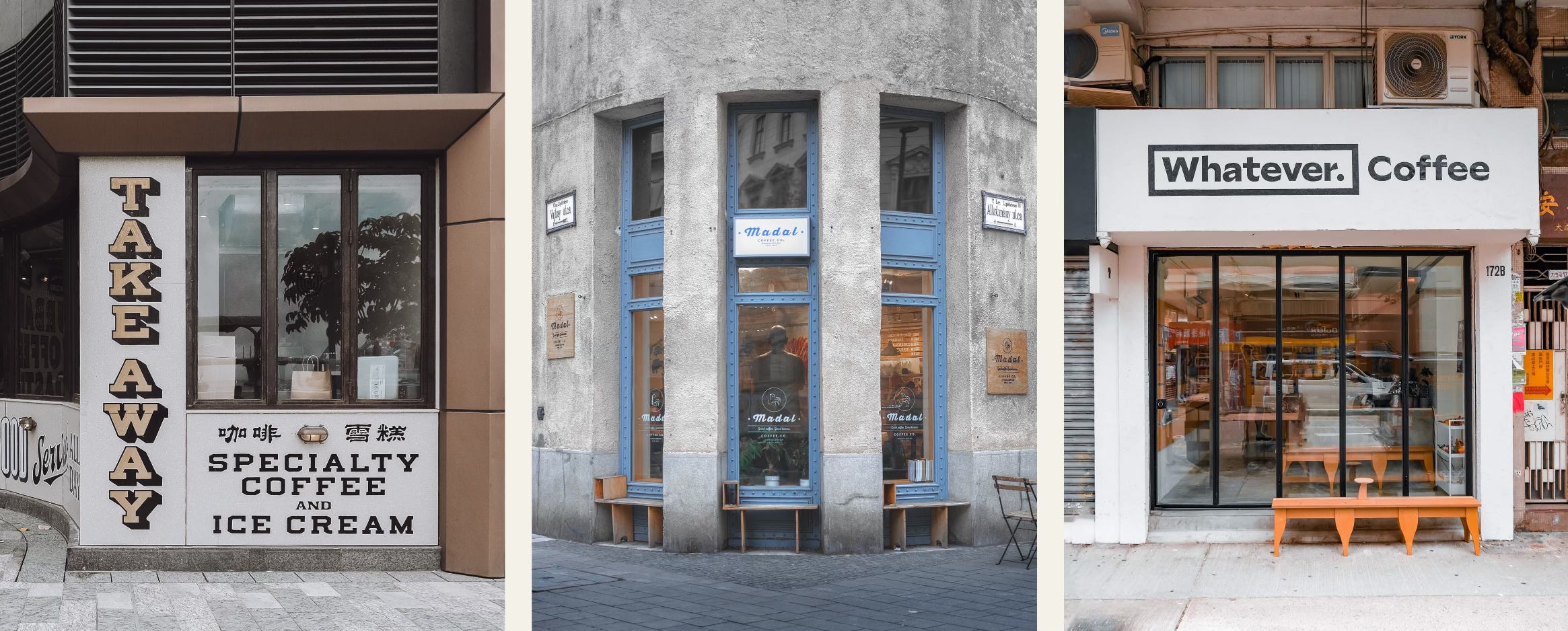
The storefront is the prologue. It anchors the viewer in a specific place and time before they ever see the coffee. A glass box in minimalist Tokyo conveys "precision," while a peeling wooden door in Kyoto conveys "history." Without the facade, your interior shots lack geographical context.
The technique
Shoot wide & flat: Position yourself directly parallel to the storefront. Use your camera’s grid to align the vertical door frames with the edge of your image. This creates a graphic, architectural symmetry that feels intentional.
Isolate the texture: Don’t just shoot the sign. Look for the material palette—the juxtaposition of raw concrete against warm wood, or neon light against old brick. These textures define the “temperature” of the city.
Field tip
Arrive 15 minutes before opening. The light is usually softer (morning blue hour), and you get a clean, unobstructed view of the architecture without any visual clutter or street traffic blocking your frame.
02. The variable: Changing your perspective
The theory
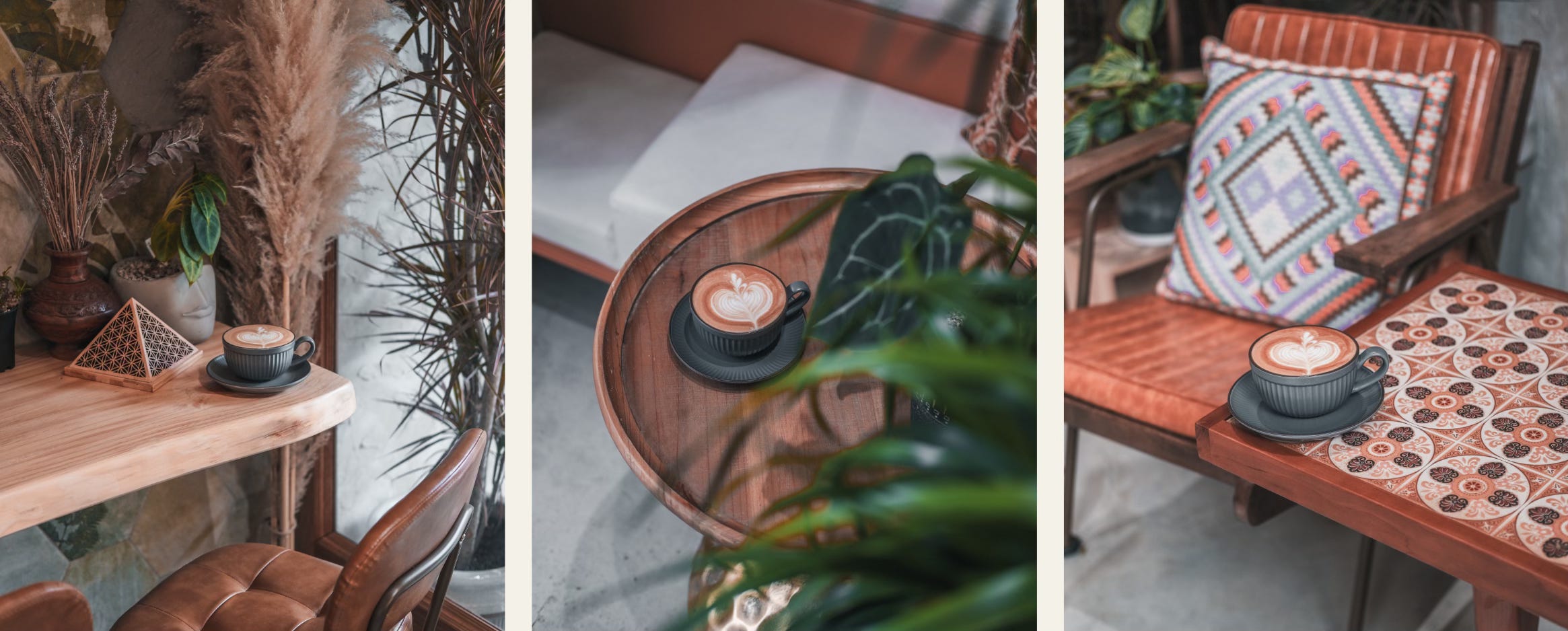
Most people shoot from “consumption height”—sitting in a chair, phone at chest level. This results in the same generic angle everyone else posts. To document a space, you must treat the cup as a subject that moves through the environment.
The technique
The “hero” angle (low): Place your camera directly on the table surface. This makes the cup look monumental and emphasizes the depth of the room behind it (blurring out the background).
The “graphic” angle (high): Stand up and shoot directly down. This removes depth and focuses purely on geometry—the circle of the cup against the square of the table.
Field tip
If the shop is quiet, don’t stay in one seat. Move your cup to the window ledge for side-lighting, or to the bar to capture the espresso machine in the background.
03. The interior: Hunting for light
The theory
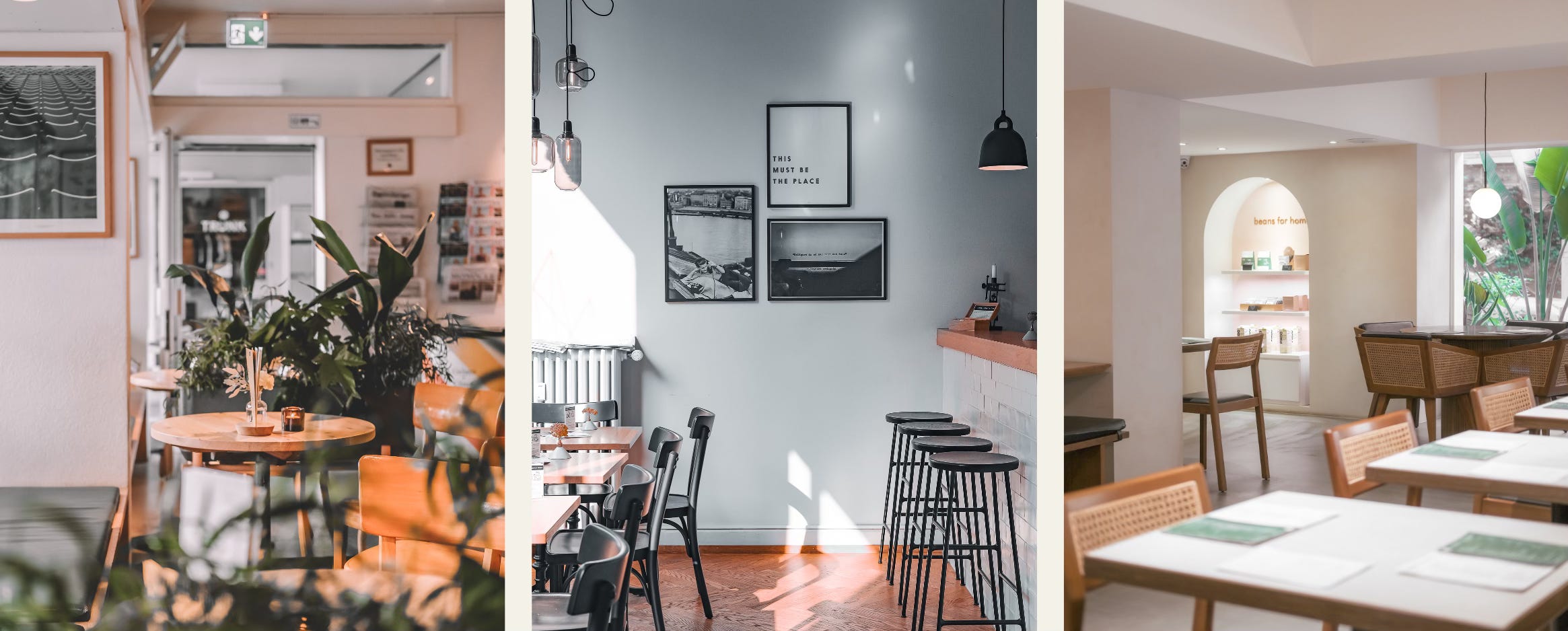
A “wide shot” of a whole room often looks messy and flat, like a real estate listing. The “soul” of a shop lives in the details—the way light hits a specific corner, a texture, or a piece of furniture.
The technique
Find the “pools”: Look for where natural light falls in a concentrated pool—on a velvet chair, a concrete wall, or the espresso bar. Expose for the light (make the shadows dark) to create a moody, cinematic feel.
Layer the details: Instead of shooting a flat wall, create depth by shooting through something. Use a plant leaf or a chair back in the blurred foreground to frame the light hitting your subject in the background. This “peek-through” effect makes the viewer feel like they are discovering the space, not just looking at it.
Field tip
Position yourself so the main light source (window) is to your side or back. Never shoot directly into a bright window unless you want a silhouette.
04. The composition: Filling the frame
The theory
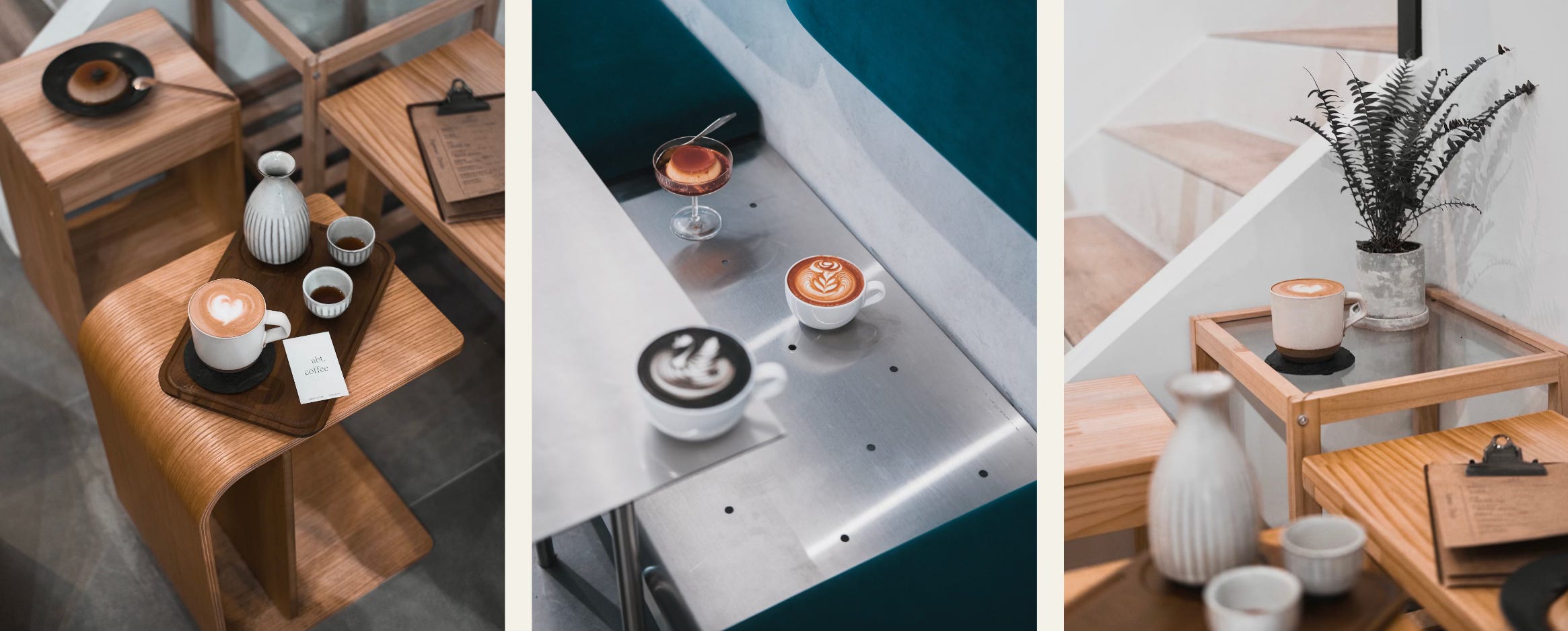
A single cup on a large empty table feels lonely and unintentional. “Filling the frame” creates a sense of abundance and intimacy—it makes the viewer feel like they are sitting right there at the table with you.
The technique
Layering: Build a scene with depth. Place a pastry in the foreground (slightly out of focus), the coffee in the mid-ground (sharp focus), and the cafe bustle in the background (blurred).
The “crop” factor: Don’t be afraid to crop tightly. You don’t need to show the whole saucer. Cropping into the edge of the plate or the handle of the mug can make the image feel more dynamic and less “staged.”
Field tip
Use the “Portrait Mode” or a wide aperture (f/1.8 or f/2.0) to create that separation between your layers.
05. The constant: Using props to anchor
The theory
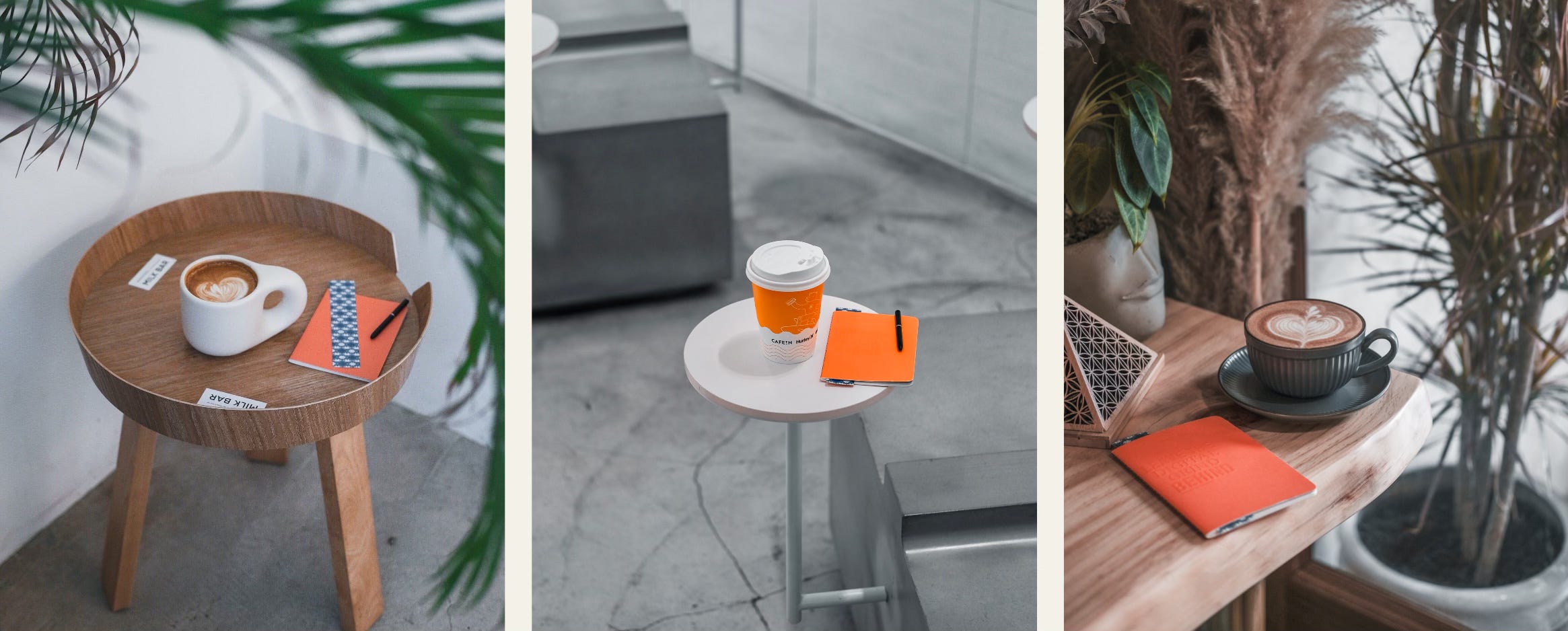
Coffee shops are visually chaotic—different tables, varied crockery, mismatched art. To create a cohesive “brand” for your photography across different cities, you need a control variable. A prop that travels with you.
The technique
The anchor object: Bring a specific item that appears in your shots regardless of the location. A notebook, a vintage film camera, or a specific pen.
The narrative: It turns a random collection of photos into a cohesive series. That recurring notebook becomes a visual thread that stitches a shop in Taipei to a roastery in Kyoto, proving they are part of the same journey.
Field tip
Start simple. A small notebook or a black pen are easy, natural props that suggest "observation" without looking too staged.
06. The threshold: Shooting through glass
The theory
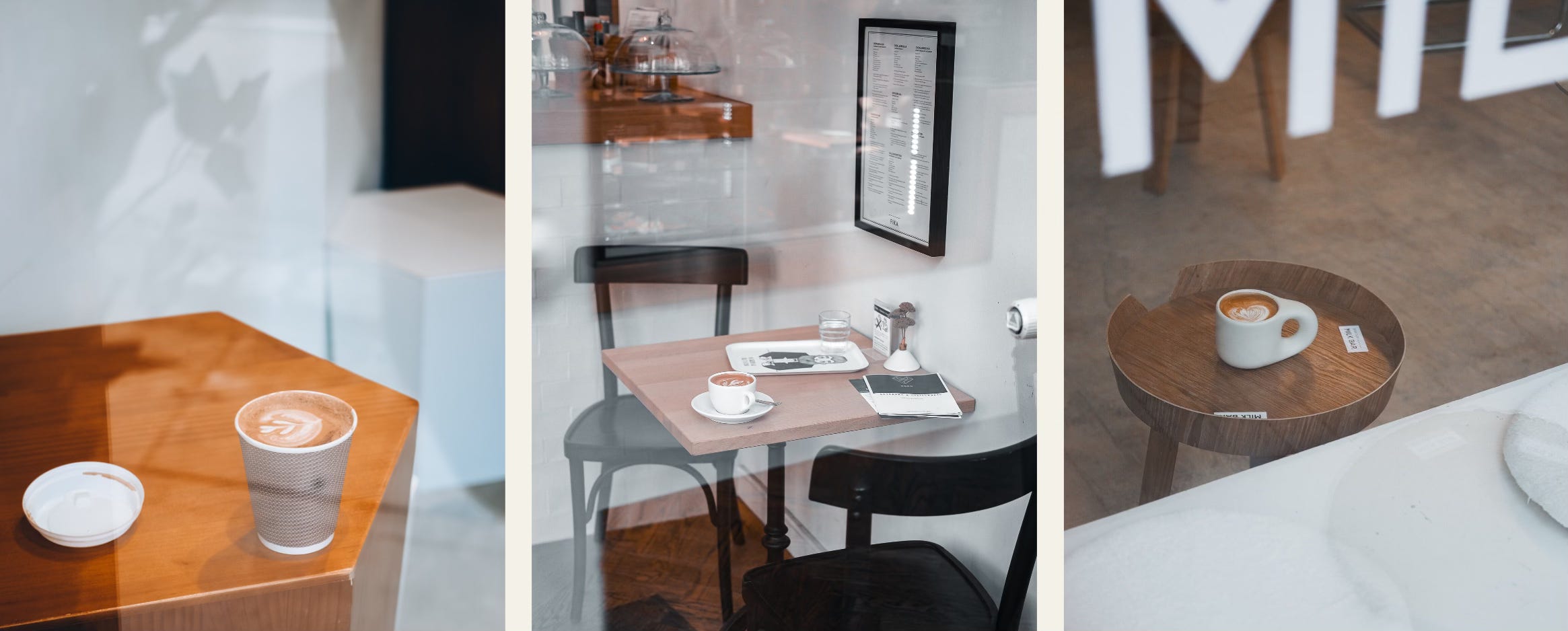
Glass is a natural filter that adds mystery and “voyeurism” to an image. Shooting from the street looking in (or inside looking out) creates a multi-layered image that captures two worlds at once.
The technique
The reflection layer: Focus on the subject inside (coffee cup), but frame the shot so the reflection of the street outside (cars, neon signs) is visible on the glass. This captures the City and the Origin in one exposure.
The weather layer: Rain or condensation on a window is gold. Focus on the raindrops, letting the warm glow of the cafe inside blur into a beautiful, abstract background.
Field tip
If you are shooting through a window, get your lens as close to the glass as possible to minimize your own reflection, unless you want to be part of the ghost layer.
07. The contrast: Texture pairing
The theory
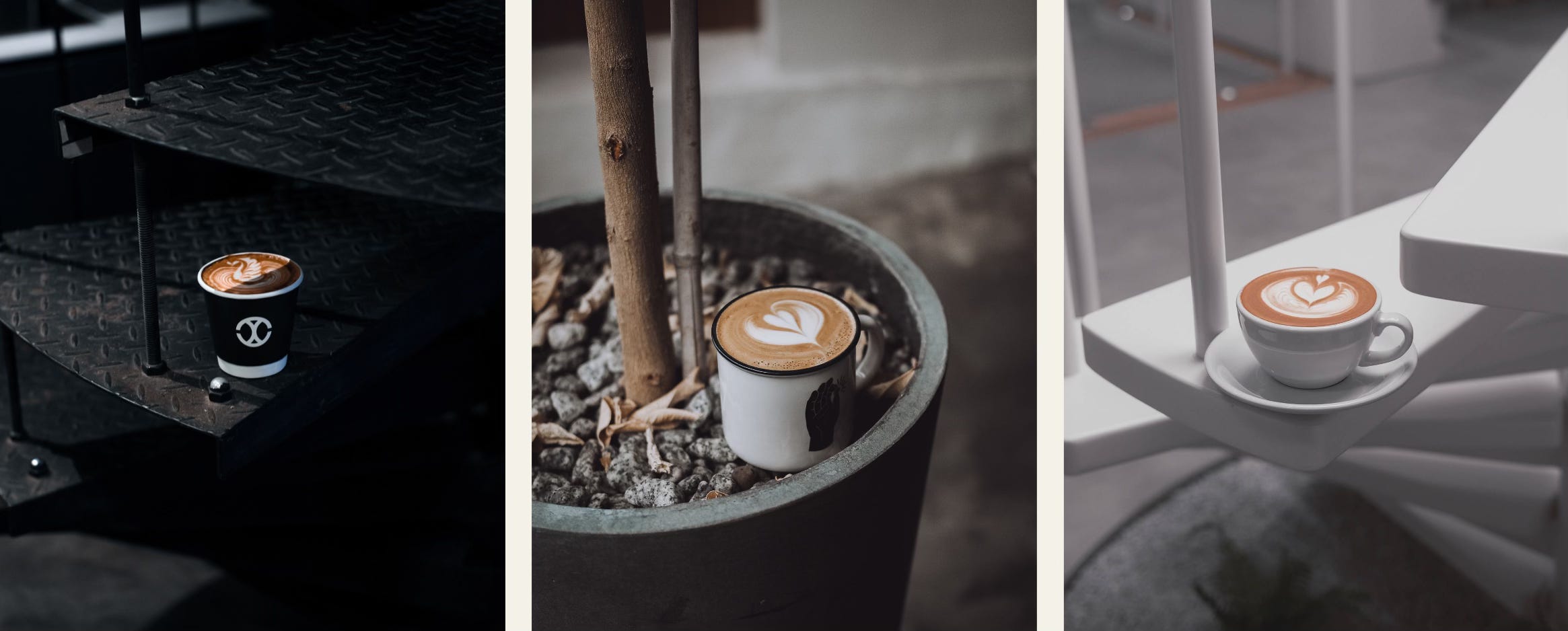
The “unexpected” placement creates visual tension. A delicate ceramic cup looks beautiful but predictable on a wooden table. It looks striking and artistic on a raw concrete stair or metal stool staircase.
The technique
Hunt for texture: Look for surfaces that contrast with the coffee. Rough vs. smooth. Cold (stone/metal) vs. hot (coffee). Dark vs. light.
The “floor” shot: If the shop has incredible terrazzo or mosaic tiles, don’t be afraid to place the cup carefully on the floor (in a corner where no one walks) to capture that pattern.
Field tip
Be quick, if you’re placing a cup on a staircase or floor, take the shot in 10 seconds and move it back. Don’t block the flow of the shop.
The final frame: Building your archive
Photography is not just about proving you were there; it is about documenting how a place felt. The steam rising in a cold Kyoto morning, the golden hour hitting a Budapest facade, the silence of a Vienna arcade—these are the details that fade if you don’t catch them.
Next time you walk into a shop, don’t just order and sit. Look at the light. Check the angles. Find the texture. Treat your coffee as a subject, not just a drink.